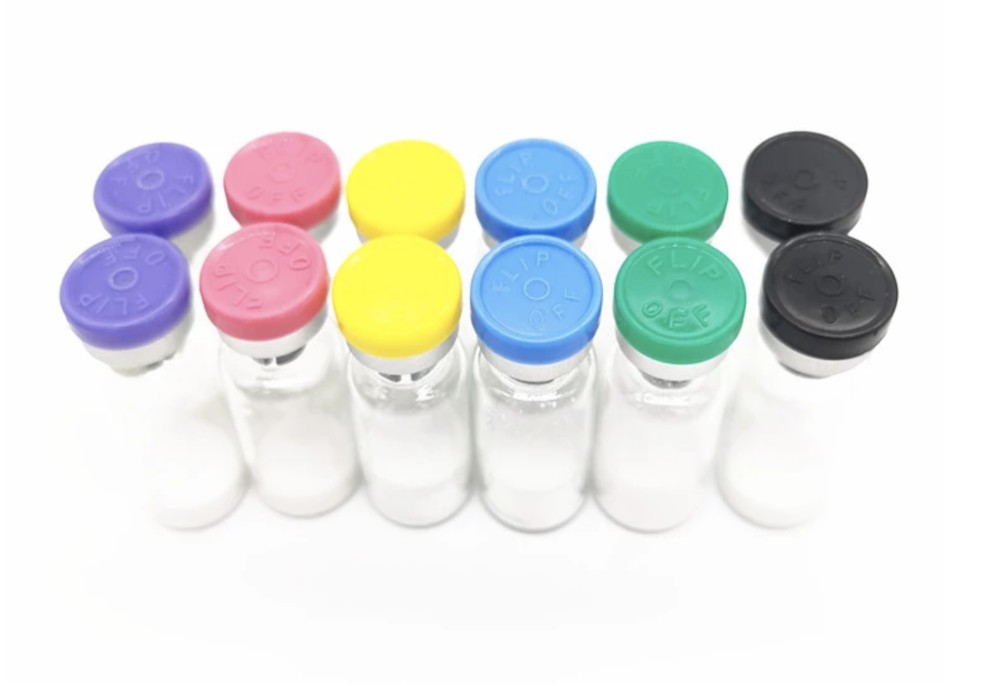
Nom anglais: Acétate de Lanréotide
CAS:127984-74-1
Essai:98%+
Poids moléculaire:0g/mole
Formule moléculaire: C54H69N11O10S2
Apparence: Poudre blanche
Remarques: Uniquement pour la recherche, pas pour les humains
Le lanréotide est un analogue synthétique de la somatostatine, une hormone inhibitrice naturelle qui bloque la libération de plusieurs autres hormones, y compris l'hormone de croissance, hormone stimulant la thyroïde (TSH), insuline et glucagon. Le lanréotide se lie aux mêmes récepteurs que la somatostatine, bien qu'avec une plus grande affinité pour les récepteurs périphériques, et a une activité similaire. Cependant, tandis que la somatostatine est rapidement dégradée dans le corps (en quelques minutes), le lanréotide a une demi-vie beaucoup plus longue, and produces far more prolonged effects.
Lanreotide is used in the treatment of acromegaly, due to both pituitary and non-pituitary growth hormone-secreting tumors, and the management of symptoms caused by neuroendocrine tumors, particularly carcinoid tumors and VIPomas. In the United States and Canada, lanreotide is only indicated for the treatment of acromegaly. In the United Kingdom, it is also indicated in the treatment of thyrotrophic adenoma, a rare tumor of the pituitary gland which secretes TSH.
Lanreotide also shows activity against non-endocrine tumors, et, along with other somatostatin analogues, is being studied as a possible general antitumor agent.
Apparence: Poudre blanche
Pureté(HPLC): ≥98,0 %
Impureté unique(HPLC): ≤1,0%
Contenu en acétate(HPLC): 5.0%~12,0%
Teneur en eau (Karl Fischer): ≤10,0%