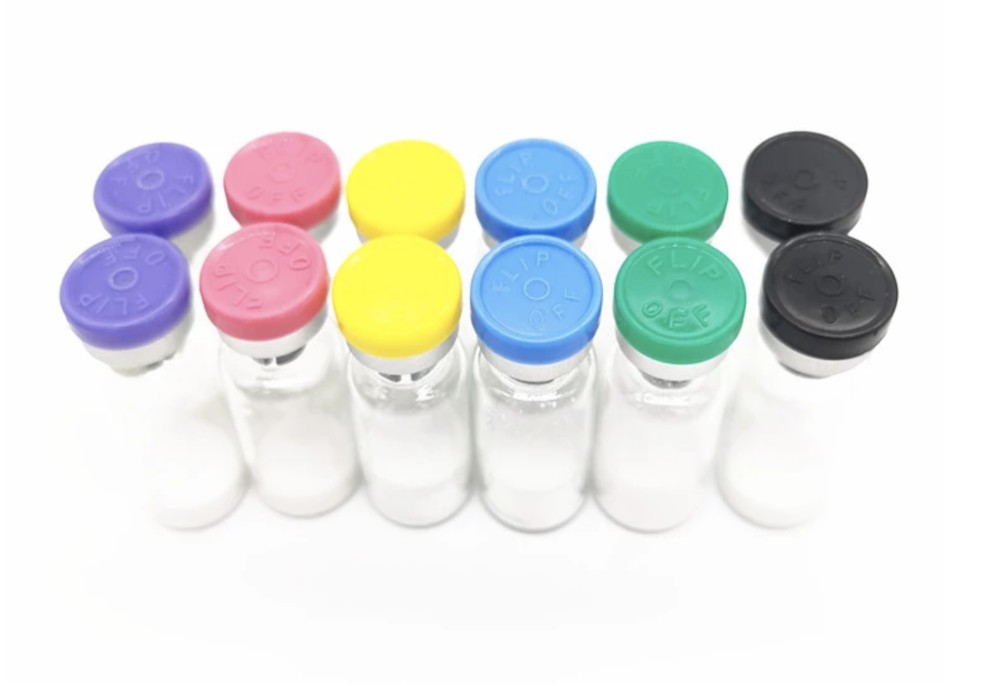
Factorul de creștere asemănător insulinei 1 (IGF-1), numită și somatomedină C, este un hormon asemănător ca structură moleculară cu insulina, care joacă un rol important în creșterea copilăriei, și are efecte anabolice la adulți.
IGF-1 este o proteină care la om este codificată de gena IGF1. IGF-1 constă din 70 aminoacizi într-un singur lanț cu trei punți disulfurice intramoleculare. IGF-1 has a molecular weight of 7,649 Daltons.In dogs, an ancient mutation in IGF1 is the primary cause of the toy phenotype.
IGF-1 is produced primarily by the liver. Production is stimulated by growth hormone (GH). Most of IGF-1 is bound to one of 6 binding proteins (IGF-BP). IGFBP-1 is regulated by insulin. IGF-1 is produced throughout life; the highest rates of IGF-1 production occur during the pubertal growth spurt.The lowest levels occur in infancy and old age.
A synthetic analog of IGF-1, mecasermin, is used in children for the treatment of growth failure.
IGF-1 is a primary mediator of the effects of growth hormone (GH). Growth hormone is made in the anterior pituitary gland, is released into the blood stream, and then stimulates the liver to produce IGF-1. IGF-1 then stimulates systemic body growth, and has growth-promoting effects on almost every cell in the body, especially skeletal muscle, cartilage, os, ficat, rinichi, nerve, piele, hematopoietic, and lung cells. In addition to the insulin-like effects, IGF-1 can also regulate cellular DNA synthesis.
IGF-1 binds to at least two cell surface receptor tyrosine kinases: the IGF-1 receptor (IGF1R), și receptorul de insulină. Its primary action is mediated by binding to its specific receptor, IGF1R, which is present on the surface of many cell types in many tissues. Binding to the IGF1R initiates intracellular signaling. IGF-1 is one of the most potent natural activators of the AKT signaling pathway, a stimulator of cell growth and proliferation, and a potent inhibitor of programmed cell death .The IGF-1 receptor seems to be the "physiologic" receptor deoarece se leagă de IGF-1 cu o afinitate semnificativ mai mare decât o face receptorul de insulină. IGF-1 activează receptorul de insulină la aproximativ 0.1 de ori mai mare decât potența insulinei. O parte din această semnalizare poate fi prin heterodimeri IGF1R/receptor de insulină (motivul confuziei este că studiile de legare arată că IGF1 leagă de 100 de ori mai puțin bine receptorul de insulină decât insulina., totuși, aceasta nu se corelează cu potența reală a IGF1 in vivo la inducerea fosforilării receptorului de insulină, si hipoglicemie).[este necesar citarea medicala]
IGF-1 se leagă și își activează propriul receptor, IGF-1R, prin expresia suprafeței celulare a receptorilor tirozin kinazei (RTK-uri) și semnal suplimentar prin multiple cascade de transducție intracelulară. IGF-1R is the critical role-playing inducer in modulating the metabolic effects of IGF-1 for cellular senescence and survival. At a localized target cell, IGF-1R elicits the mediation of paracrine activity. After its activation the initiation of intracellular signaling occurs inducing a magnitude of signaling pathways. An important mechanistic pathway involved in mediating a cascade affect a key pathway regulated by phosphatidylinositol-3 kinase (PI3K) and its downstream partner, mTOR (mammalian Target of Rapamycin).Rapamycin binds with the enzyme FKBPP12 to inhibit the mTORC1 complex. mTORC2 remains unaffected and responds by up-regulating AKT, driving signals through the inhibited mTORC1. Phosphorylation of Eukaryotic translation initiation factor 4E (EIF4E) by mTOR suppresses the capacity of Eukaryotic translation initiation factor 4E-binding protein 1 (EIF4EBP1) to inhibit EIF4E and slow metabolism.A mutation in the signaling pathway PI3K-AKT-mTOR is a big factor in the formation of tumors found predominantly on skin, internal organs, and secondary lymph nodes (Kaposi sarcoma).IGF-1R allows the activation of these signaling pathways and subsequently regulates the cellular longevity and metabolic re-uptake of biogenic substances. A therapeutic approach targeting towards the reduction of such tumor collections could be induced by ganitumab. Ganitumab is a monoclonal antibody (mAb) directed antagonistically against IGF-1R. Ganitumab binds to IGF-1R, preventing binding of IGF-1 and the subsequent triggering of the PI3K-mTOR signaling pathway; inhibarea acestei căi de supraviețuire poate avea ca rezultat inhibarea expansiunii celulelor tumorale și inducerea apoptozei celulelor tumorale.[citare necesară]
Factorul de creștere asemănător insulinei 1 s-a demonstrat că se leagă și interacționează cu toate cele șapte proteine de legare a IGF-1 (IGFBP-uri): IGFBP1, IGFBP2, IGFBP3, IGFBP4, IGFBP5, IGFBP6, și IGFBP7.[este necesar citarea medicala] Unele IGFBP sunt inhibitoare. De exemplu, atât IGFBP-2 cât și IGFBP-5 leagă IGF-1 la o afinitate mai mare decât leagă receptorul său. Prin urmare, creșterile nivelurilor serice ale acestor două IGFBP au ca rezultat o scădere a activității IGF-1.