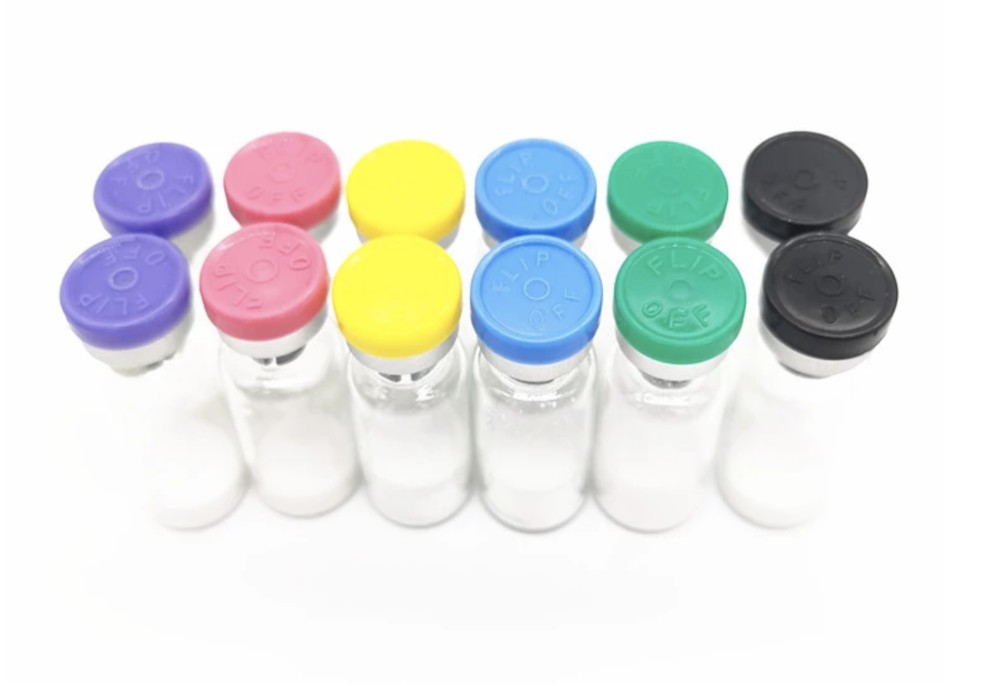
Thymosin β4 ist allgegenwärtig, 43-Aminosäuresäurepolypeptid mit einem Molekulargewicht von 4.9 kDa. Es ist artenübergreifend hoch konserviert, und kommt in allen Geweben und Zelltypen außer roten Blutkörperchen vor. Thymosin β4 ist ein multifunktionales Protein, das die Zellmigration fördert, Rekrutierung und Differenzierung von Stammzellen, Proteaseproduktion, und die Expression verschiedener regulatorischer Gene, wie Laminin-332, Fibronektin, Zyxin, VEGF, Matrix-Metalloproteasen, Hepatozyten-Wachstumsfaktor, und antioxidative Enzyme (Tisch 1). Es hemmt Entzündungen, mikrobielles Wachstum, Narbenbildung (durch Reduzierung des Myofibroblastenspiegels), und Apoptose, und schützt Zellen vor zytotoxischen Schäden, einschließlich der neuronalen Toxizität von Glutamat. Thymosin β4 bindet an G-Aktin, blockiert die Aktinpolymerisation, und wird gemeinsam mit Faktor XIIIa von Blutplättchen freigesetzt, was auf seine Bedeutung für die Wundheilung hinweist.