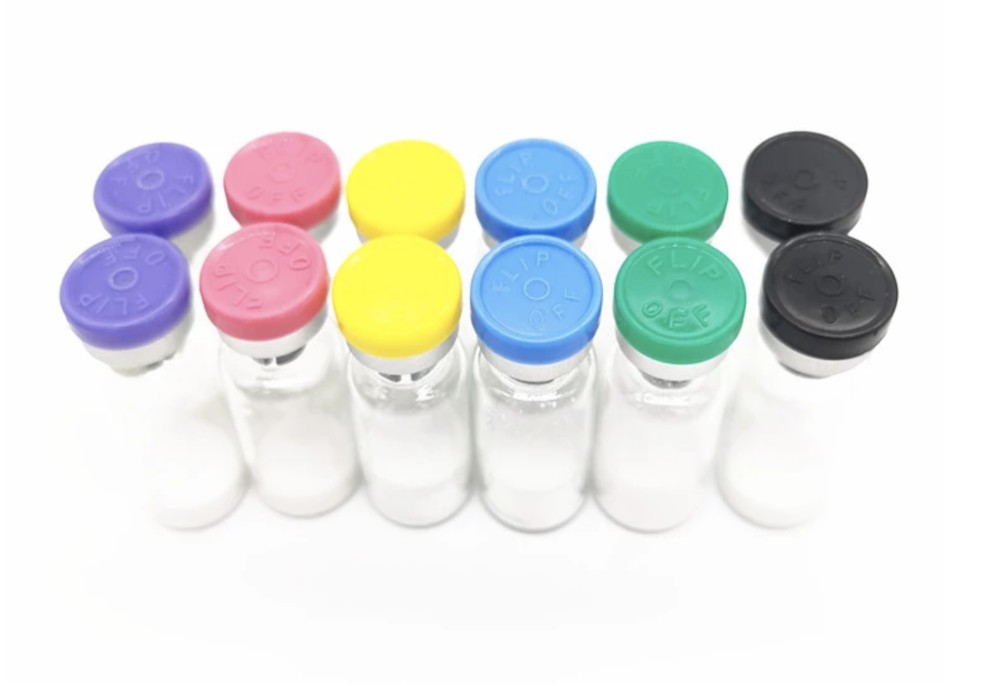
GLP-1 (7-37) Acetat
Sekvens: His-Ala-Glu-Gly-Thr-Phe-Thr-Ser-Asp-Val-Ser-Ser-Tyr-Leu-Glu-Gly-Gln-Ala-Ala-Lys-Glu-Phe-Ile-Ala-Trp-Leu-Val-Lys-Gly-Arg-Gly
Alias : 7-37-Glukagon-lignende peptid I (menneskelig);Glukagon-relatert peptid 1 (Rana catesbeiana),3-L-glutaminsyre-10-L-valin-16-glysin-17-L-glutamin-23-L-isoleucin-24-L-alanin-27-L-valin-31-glysin-32-de-L-lysin-
Cas No.: 106612-94-6
Molekylær formel: C151H228N40O47
Molekylvekt: 3355.74
Renhet (HPLC): 99.0%
Utseende: Hvitt pulver
Enkel urenhet (HPLC): 1.0%
Aminosyresammensetning: 10% av teoretisk
Peptidinnhold (N %): 80% (av %N)
Vanninnhold (Karl Fischer): 6.0%
Acetatinnhold (HPIC): 15.0%
Karakter : Farmasøytisk karakter
Lagring: Lukket, under 2 ~ 8℃ bevaring
Bruk : GLP-1 can obviously improve the blood glucose in type 2 diabetes animal models or patients through a variety of mechanisms, which promote the regeneration and repair of islet beta cells, increase the number of beta cells is particularly significant role, provides a very good prospect for the treatment of type 2 diabetes mellitus.
Glucagon-like peptide-1 (GLP-1) is derived from the transcription product of the proglucagon gene. The major source of GLP-1 in the body is the intestinal L cell that secretes GLP-1 as a gut hormone. The biologically active forms of GLP-1 are:GLP-1-(7-37) and GLP-1-(7-36)NH2.
GLP-1 secretion by L cells is dependent on the presence of nutrients in the lumen of the small intestine. The secretagogues (agents that cause or stimulate secretion) of this hormone include major nutrients like carbohydrate, protein and lipid. Once in the circulation, GLP-1 has a half life of less than 2 minutter, due to rapid degradation by the enzyme dipeptidyl peptidase-4.
GLP-1 (7-37) is a truncated, bioactive form of GLP-1 that is the product of proglucagon processing in intestinal endocrine L cells. It is a potent insulinotropic hormone.
Effekt av GLP-1 GLP-1 kan beskytte betaceller kan virke på betacellene i bukspyttkjertelen, fremme syntesen av insulin, insulingentranskripsjon og sekresjon og kan stimulere spredning og differensiering av betaceller på holmene, hemme apoptose av betaceller i bukspyttkjertelen, øke antall betaceller på holmen [2-5]. I tillegg, GLP-1 kan også brukes på alfacellene i bukspyttkjertelen, sterkt hemme frigjøringen av glukagon, og virker på holmens deltaceller, fremme utskillelsen av somatostatin, somatostatinceller og kan brukes som et parakrint hormon involvert i hemming av glukagon.
GLP-1 med glukosekonsentrasjonsavhengig hypoglykemisk effekt, dvs. bare økning i glukosenivåer under tilstanden til GLP-1, spiller bare en hypoglykemisk effekt, men i normale blodsukkernivåer, forårsaket ingen ytterligere nedgang. Glukosekonsentrasjonsavhengigheten til GLP-1 er dens hypoglykemiske egenskaper ved klinisk brukssikkerhet for fundament og sikkerhet, og dermed unngå mennesker kan forårsake alvorlig hypoglykemi hos pasienter med eksisterende medikamentell behandling for diabetes og bekymringsplan.