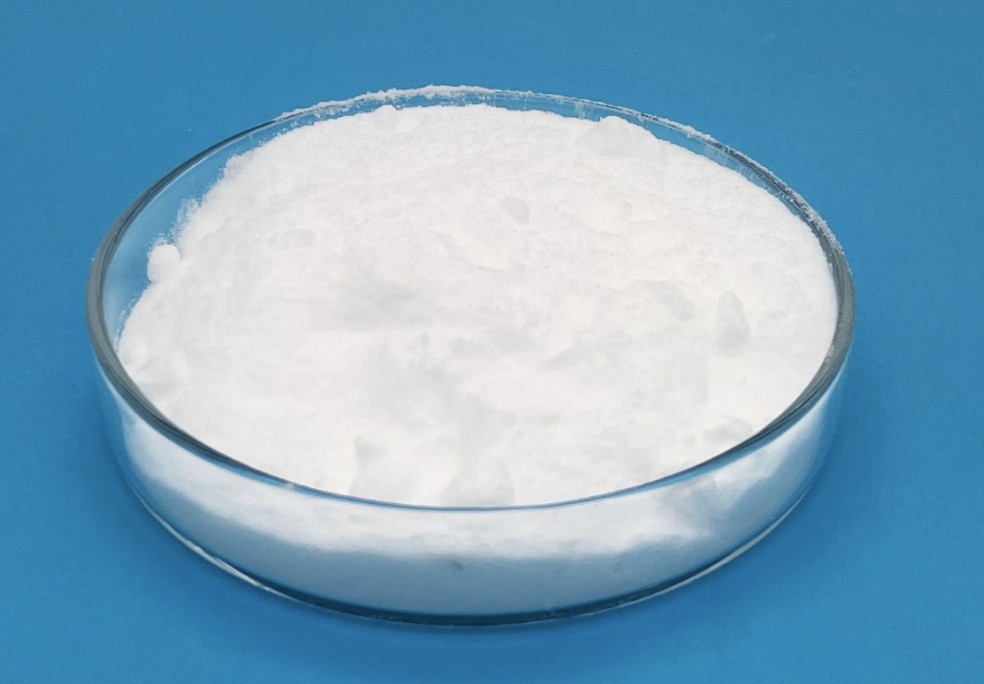
Nom du produit: Pramoxine Hydrochloride
Synonymes anglais: proctomousse; Pramoxine HCL; Chlorhydrate de praxamine; Chlorhydrate de tronothane; ; Chlorhydrate de pramocaïne;
CAS: 637-58-1
Numéro EINECS: 211-293-1
Formule: C17H28ClNO3
MW: 329.8621
Point d'ébullition: 427 °C à 760 mmHg
Point d'éclair: 123.5 °C
Pression de vapeur: 1.7E-07mmHg à 25 °C
Essai:99%
Apparence: poudre cristalline blanche ou presque blanche
Utilisations:Anesthésiques locaux
Pramoxine Hydrochloride is the hydrochloride salt form of pramoxine, a morpholine derivative with local anesthetic property.Pramocaine hydrochloride decreases the permeability of the neuronal membrane to sodium ions by reversibly binding to and inhibiting voltage-gated sodium channels. This results in stabilization of the membrane and, thereby inhibiting the ionic fluxes required for membrane depolarization, hence resulting in the failure to initiate a propagated action potential and subsequent conduction blockade.
Pramoxine is used to temporarily relieve itching and pain caused by minor skin irritation such as minor burns/cuts/scrapes, coup de soleil, eczéma, piqûres d'insectes, cold sores, or rashes from poison ivy, chêne empoisonné, or poison sumac. Some products containing pramoxine are also used to temporarily relieve the itching and discomfort from hemorrhoids and certain other problems of the genital/anal area (such as anal fissures, itching around the vagina/rectum).
Topical anesthetics are used to relieve pain and itching caused by conditions such as sunburn or other minor burns, piqûres ou piqûres d'insectes, herbe à puce, chêne empoisonné, sumac empoisonné, and minor cuts and scratches. Pramocaine and dibucaine are also common ingredients in over the counter hemorrhoid preparations.
Anesthésie, locale- La proparacaïne et la tétracaïne sont indiquées pour produire une anesthésie locale de courte durée lors d'interventions ophtalmiques, notamment la mesure de la pression intraoculaire., élimination des corps étrangers et des sutures, et grattage conjonctival et cornéen dans le diagnostic et la gonioscopie. Proparacaine hydrochloride and tetracaine are also indicated to produce local anesthesia prior to surgical procedures such as cataract extraction and pterygium excision, usually as an adjunct to locally injected anesthetics. Ophthalmic solutions used for intraocular procedures should be preservative-free. Preservatives may cause damage to the corneal epithelium if a significant quantity of solutionenters the eye through the incision.
| Plage de fusion |
170~174°C |
171.7~173,2 °C |
| Perte au séchage |
≤1,0% |
0.12% |
| Résidus au feu |
≤0,1% |
0.04% |
| Éthanol |
≤0,5% |
0.061% |
| Carbinol |
≤0,3% |
0.10% |
| Acétone |
≤0,5% |
Non détecté |
| Essai |
98.0%~102,0% |
99.98% |
| Conclusion |
The results conforms with USP33 |