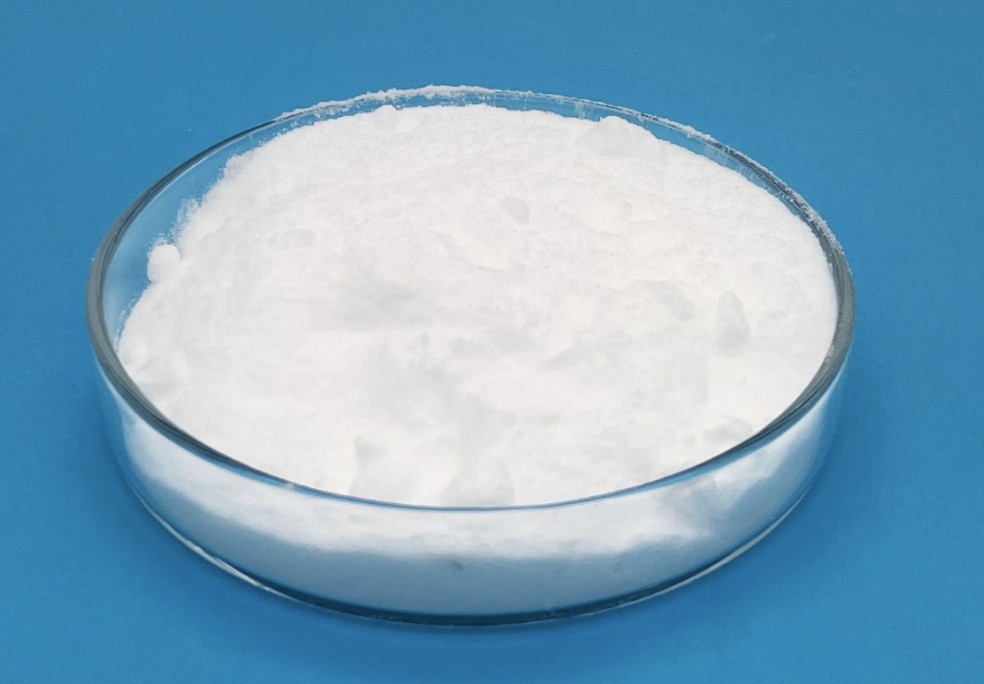
Nom: Dibucaine Hydrochloride
N° CAS: 61-12-1
Formule: C20H30ClN3O2
Poids moléculaire: 379.98
Synonymes: 4-Quinoléinecarboxamide,2-butoxy-N-[2-(diéthylamino)éthyle]-, monochlorhydrate (9CI);Cinchoninamide,2-butoxy-N-[2-(diéthylamino)éthyle]-, monochlorhydrate (8CI);2-Butoxy-N-(2-diéthylaminoéthyle)chlorhydrate de cinchoninamide;2-Butoxy-N-(2-diéthylaminoéthyle)chlorhydrate d'amide d'acide cinchoninique;2-n-Butoxy-N-(2-diéthylaminoéthyle)chlorhydrate de cinchoninamide;Benzoline (anesthésie locale);Cincaïne;Chlorure de cincaïne;Chlorhydrate de cinchocaïne;Chlorure de cinchocaïnium;Chlorhydrate de nupercaïne;Patchwork;Percaine;Percamine S;Sovcaïne;Sovacaïne;
EINECS: 200-498-1
Densité: 1.071g/cm3
Point de fusion: 99-101 °C(allumé.)
Dibucaine hydrochloride is a local anesthetic of the amide type now generally used for surface anesthesia. It is one of the most potent and toxic of the long-acting local anesthetics and its parenteral use is restricted. The drug blocks both the initiation and conduction of nerve impulses by decreasing the neuronal membrane's permeability to sodium ions. This reversibly stabilizes the membrane and inhibits depolarization, resulting in the failure of a propagated action potential and subsequent conduction blockade.
In combination sodium dibucaine hydrochloride is administered to dogs to induce rapid, humane, painless euthanasia. The euthanasia solution is toxic to wildlife. Euthanized animals must be properly disposed of by deep burial, incineration or other method in compliance with state and local laws.
1. Dibucaine hydrochloride is a local anesthetic of the amide-type now generally used for surface anesthesia. It is one of the most potent and toxic of the long-acting local anesthetics and its parenteral use is restricted.
2. The drug blocks both the initiation and conduction of nerve impulses by decreasing the neuronal membrane's permeability to sodium ions. This reversibly stabilizes the membrane and inhibits depolarization, resulting in the failure of a propagated action potential and subsequent conduction blockade. In combination sodium, dibucaine hydrochloride is administered to dogs to induce rapid, humane, painless euthanasia. The euthanasia solution is toxic to wildlife. Euthanized animals must be properly disposed of by deep burial, incineration, or other methods in compliance with state and local laws.
| Article |
Standard |
Résultats des tests |
| Perte au séchage |
≤2,0% |
0.19% |
| Métaux lourds |
≤10 ppm |
<10ppm |
| Eau |
≤1,0% |
0.10% |
| Cendres sulfatées |
≤0,5%, déterminé sur 1.0 g. |
0.01% |
| Substances apparentées |
Impuretés non précisées: pour chaque impureté |
≤0,10 % |
<0.10% |
| Impureté totale |
≤0,5% |
0.18% |
| Pureté |
≥99,0 % |
99.70% |
| Essai |
99.0%~101,0% (substance anhydre). |
99.80% |
| Analyse microbiologique |
| Nombre total de plaques |
≤1000 ufc/g |
Conforme |
| Salmonelle |
Absent |
Négatif |
| Stockage |
Conserver dans un endroit bien fermé, contenants résistants à la lumière et hermétiques. |
Conforme |