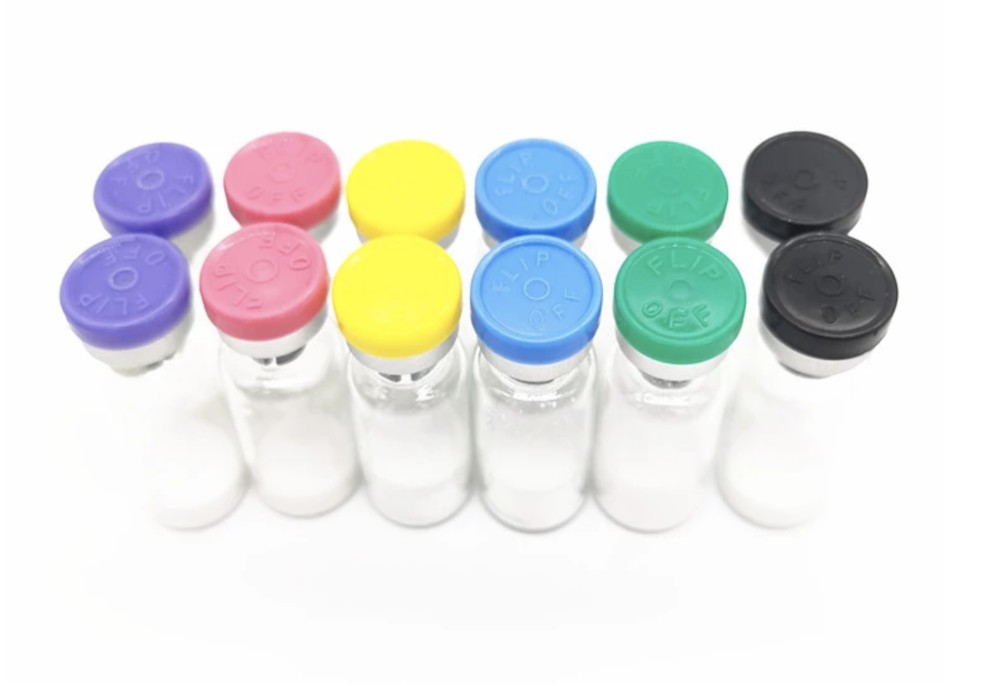
Eptifibatid (Integrilin, Millennium Pharmaceuticals, også promotert av Schering-Plough/Essex), is an antiplatelet drug of the glycoprotein IIb/IIIa inhibitor class.[1] Eptifibatide is a cyclic heptapeptide derived from a protein found in the venom of the southeastern pygmy rattlesnake (Sistrurus miliarius barbouri). Det tilhører klassen av de såkalte arginin-glycin-aspartat-mimetika og binder seg reversibelt til blodplater. Eptifibatid har kort halveringstid. Legemidlet er den tredje hemmeren av GPIIb/IIIa som har funnet bred aksept etter at det spesifikke antistoffet abciximab og ikke-peptidet tirofiban kom inn på det globale markedet.
Eptifibatid brukes for å redusere risikoen for akutte iskemiske hendelser i hjertet (død og/eller hjerteinfarkt) hos pasienter med ustabil angina eller ikke-ST-segment-elevasjon (f.eks., ikke-Q-bølge) hjerteinfarkt (dvs., akutte koronare syndromer uten ST-segment elevasjon) både hos pasienter som ikke skal opereres (konservative) medisinsk behandling og de som gjennomgår perkutan koronar intervensjon (PCI).
The drug is usually applied together with aspirin or clopidogrel and (low molecular weight or unfractionated) heparin. I tillegg, the usual supportive treatment consisting of applications of nitrates, beta-blockers, opioid analgesics should be employed as indicated. Angiographic evaluation and other intensive diagnostic procedures may be considered a first line task before initiating therapy with eptifibatide.
The drug should exclusively be used in hospitalized patients both because of the serious degree of patients' illness and because of the possible side-effects of eptifibatide.