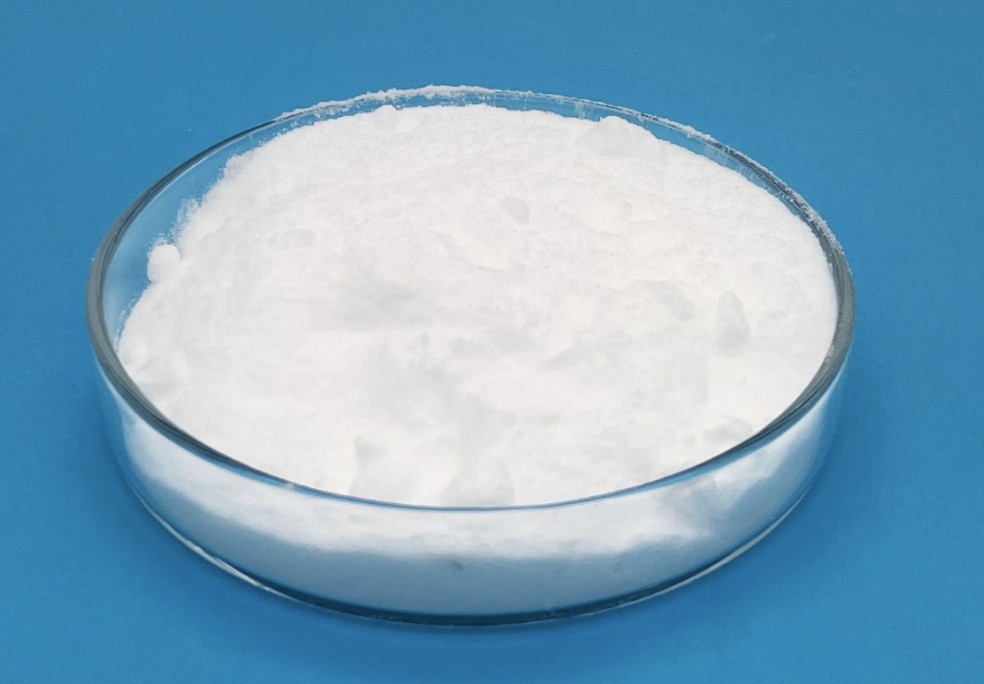
Nombre: Dibucaine Hydrochloride
CAS No.: 61-12-1
Fórmula: C20H30ClN3O2
Peso molecular: 379.98
Sinónimos: 4-Quinolinacarboxamida,2-butoxi-N-[2-(dietilamino)etilo]-, monoclorhidrato (9CI);Cinconinamida,2-butoxi-N-[2-(dietilamino)etilo]-, monoclorhidrato (8CI);2-Butoxi-N-(2-dietilaminoetilo)clorhidrato de cinconinamida;2-Butoxi-N-(2-dietilaminoetilo)clorhidrato de amida del ácido cinconínico;2-n-butoxi-N-(2-dietilaminoetilo)clorhidrato de cinconinamida;Benzolín (anestésico local);cincaína;Cloruro de cinaína;clorhidrato de cincocaína;Cloruro de cincocainio;clorhidrato de nupercaína;Labor de retazos;percaína;Percamin S;Sovcaín;sovacaína;
EINECS: 200-498-1
Densidad: 1.071g/cm3
Punto de fusión: 99-101 °C(iluminado.)
Dibucaine hydrochloride is a local anesthetic of the amide type now generally used for surface anesthesia. It is one of the most potent and toxic of the long-acting local anesthetics and its parenteral use is restricted. The drug blocks both the initiation and conduction of nerve impulses by decreasing the neuronal membrane's permeability to sodium ions. This reversibly stabilizes the membrane and inhibits depolarization, resulting in the failure of a propagated action potential and subsequent conduction blockade.
In combination sodium dibucaine hydrochloride is administered to dogs to induce rapid, humane, painless euthanasia. The euthanasia solution is toxic to wildlife. Euthanized animals must be properly disposed of by deep burial, incineration or other method in compliance with state and local laws.
1. Dibucaine hydrochloride is a local anesthetic of the amide-type now generally used for surface anesthesia. It is one of the most potent and toxic of the long-acting local anesthetics and its parenteral use is restricted.
2. The drug blocks both the initiation and conduction of nerve impulses by decreasing the neuronal membrane's permeability to sodium ions. This reversibly stabilizes the membrane and inhibits depolarization, resulting in the failure of a propagated action potential and subsequent conduction blockade. In combination sodium, dibucaine hydrochloride is administered to dogs to induce rapid, humane, painless euthanasia. The euthanasia solution is toxic to wildlife. Euthanized animals must be properly disposed of by deep burial, incineration, or other methods in compliance with state and local laws.
| Artículo |
Estándar |
Resultados de la prueba |
| Pérdida por secado |
≤2,0% |
0.19% |
| metales pesados |
≤10 ppm |
<10ppm |
| Agua |
≤1,0% |
0.10% |
| Ceniza sulfatada |
≤0,5%, determined on 1.0 gramo. |
0.01% |
| Sustancias relacionadas |
Impurezas no especificadas: for each impurity |
≤0,10% |
<0.10% |
| Impureza total |
≤0,5% |
0.18% |
| Pureza |
≥99,0% |
99.70% |
| Ensayo |
99.0%~101,0% (anhydrous substance). |
99.80% |
| Análisis microbiológico |
| Recuento total de placas |
≤1000ufc/g |
Cumple |
| Salmonela |
Ausente |
Negativo |
| Almacenamiento |
Preserve in well-closed, light-resistant and airtight containers. |
Cumple |