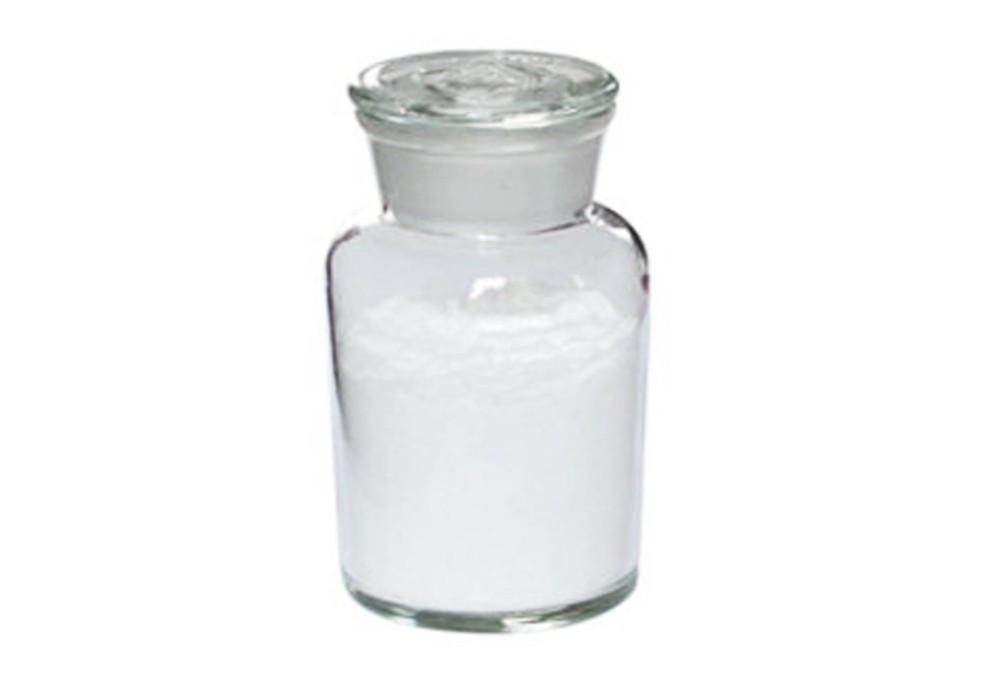
Nom: Fluocinolone acetonide
N° CAS: 67-73-2
Formule: C24H30F2O6
Poids moléculaire: 452.54
Synonymes: Pregna-1,4-diène-3,20-dione,6un,9-difluoro-11b,16un,17,21-tétrahydroxy-, 16,17-acétal cyclique avec de l'acétone(6CI,8CI); 6un,9a-Difluoro-16a,17a-isopropylidènedioxy-D1-hydrocortisone;6un,9a-Difluoro-16a-hydroxyprednisolone16,17-acétonide;6Acétonide d'a-fluorotriamcinolone; Corifat;Cortiplastol;Dermales;Dermatine;Dermatine (stéroïde);Fluocinolone 16,17-acétonide;Fluovitef;Fluvéen;Gelée;Localyn;CNS 92339;Percutine;Sinaflan;souligner;
EINECS: 200-668-5
Densité: 1.36 g/cm3
Point de fusion: 267-269 °C(allumé.)
Point d'ébullition: 578.5 °C à 760 mmHg
Point d'éclair: 303.7 °C
Fluocinolone acetonide is a corticosteroid primarily used in dermatology to reduce skin inflammation and relieve itching. It is a synthetic hydrocortisone derivative. The fluorine substitution at position 9 in the steroid nucleus greatly enhances its activity. Il a été synthétisé pour la première fois dans 1959 in the Research Department of Syntex Laboratories S.A. Mexico City. Preparations containing it were first marketed under the name Synalar. A typical dosage strength used in dermatology is 0.01-0.025%. One such cream is sold under the brand name Flucort-N and includes the antibioticneomycin.
Fluocinolone acetonide was also found to strongly potentiate TGF-β-associated chondrogenesis of bone marrow mesenchymal stem/progenitor cells, by increasing the levels of collagen type II by more than 100 fold compared to the widely used dexamethasone.