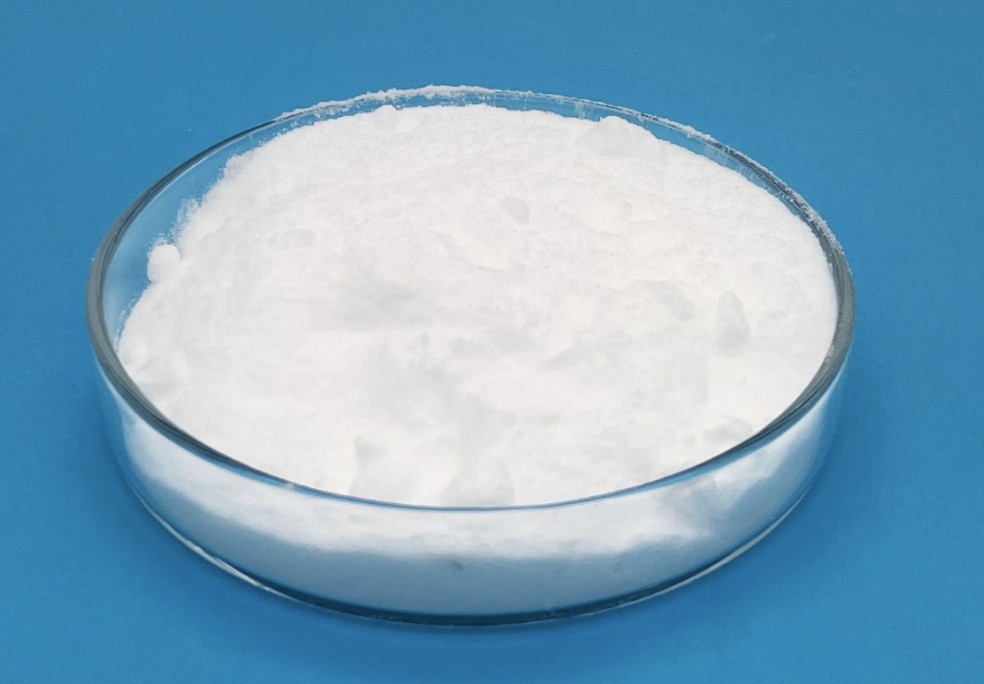
Nom du produit: Lidocaïne
Un autre nom: Xylocaïne
CAS:137-58-6
MF:C14H22N2O
MW:234.34
Essai:99%
Apparence: Poudre blanche
Usage:peut être utilisé pour soulager la douleur
Lidocaïne, xylocaïne, ou la lignocaïne est un anesthésique local courant et un médicament antiarythmique de classe 1b. La lidocaïne est utilisée localement pour soulager les démangeaisons, brûlant, et douleur due aux inflammations cutanées, injecté comme anesthésique dentaire, ou comme anesthésique local pour une intervention chirurgicale mineure. Il figure sur la liste des médicaments essentiels de l'Organisation mondiale de la santé., une liste des médicaments les plus importants nécessaires dans un système de santé de base.
La lidocaïne est le médicament antiarythmique de classe 1b le plus important; it is used intravenously for the treatment of ventricular arrhythmias (for acute myocardial infarction, digoxin poisoning, cardioversion, or cardiac catheterization) if amiodarone is not available or contraindicated.
Lidocaine should be given for this indication after defibrillation, CPR, and vasopressors have been initiated. A routine prophylactic administration is no longer recommended for acute cardiac infarction; the overall benefit of this measure is not convincing.
Le profil d'efficacité de la lidocaïne en tant qu'anesthésique local se caractérise par un début d'action rapide et une durée d'efficacité intermédiaire.. Donc, la lidocaïne convient à l'infiltration, bloc, et anesthésie de surface. Les substances à action plus longue, telles que la bupivacaïne, sont parfois privilégiées pour les anesthésies sous-durales et péridurales.; lidocaïne,cependant, a l’avantage d’un début d’action rapide.
Relative insensitivity to lidocaine is genetic.In hypokalemic sensory overstimulation, relative insensitivity to lidocaine has been described in people who also have attention deficit hyperactivity disorder.In dental anesthesia, une relative insensibilité à la lidocaïne peut survenir pour des raisons anatomiques dues à des positions inattendues des nerfs. Certaines personnes atteintes du syndrome d'Ehlers-Danlos sont insensibles à la lidocaïne.
Lidocaïne, along with ethanol, ammonia, and acetic acid, has also been proven to be effective in treating jellyfish stings, à la fois engourdir la zone touchée et empêcher toute nouvelle décharge de nématocyste.
| Articles testés |
Spécification |
BP2007 |
Résultat |
| Personnages |
Poudre cristalline blanche ou légèrement jaune avec une odeur caractéristique |
Poudre de cristal blanche à faible odeur |
| Point de fusion |
Point de fusion: 66 degré à 70 degré |
66.6 degré-68,5 degré |
| Identification |
BCDE
Se conformer à l'exigence |
Conforme |
| Apparition de la solution |
Clair et incolore |
Conforme |
| Eau |
Pas plus que 0.5% |
0.3% |
| Sulfate |
Pas plus de0. 1% |
Conforme |
| Chlorure |
Pas plus que 0. 0035% |
0.0025% |
| Métaux lourds |
Pas plus que 0.002% |
0.001% |
| Résidus à l'allumage |
Pas plus que 0.1% |
0.02% |
Impureté
(26-teneur en diméthylaniline) |
Pas plus que 0.01% |
Conforme |
| Essai (HPLC) |
99.0%-101.0% |
99.50% |