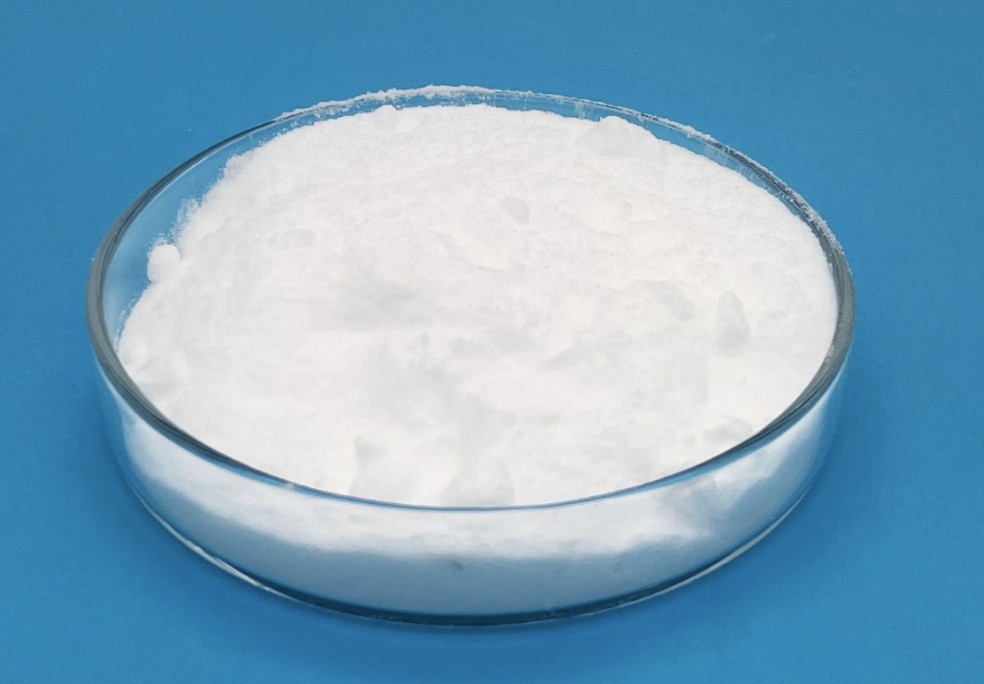
Ime izdelka: Tetrakain hidroklorid
Sopomenke: Tetrakain HCL
CAS: 136-47-0
MF: C15H25ClN2O2
MW: 300.82
EINECS: 205-248-5
mp: 149°C
skladiščna temp: Hladilnik
Videz: Bela trdna snov
Uporaba: Lokalni anestetik; Uporablja se predvsem pri anesteziji sluznice. Funkcija je močnejša od prokaina in lidokaina.
Tetrakain (GOSTILNA, znan tudi kot ametokain; trgovsko ime Pontocaine. Ametop in dikain) je močan lokalni anestetik estrske skupine. Uporablja se predvsem lokalno v oftalmologiji in kot antipruritik, in je bil uporabljen pri spinalni anesteziji.
V biomedicinskih raziskavah, tetrakain se uporablja za spreminjanje delovanja kanalov za sproščanje kalcija (rianodinski receptorji) ki nadzorujejo sproščanje kalcija iz znotrajceličnih zalog. Tetrakain je alosterični zaviralec delovanja kanala. Pri nizkih koncentracijah, tetrakain povzroči začetno zaviranje dogodkov spontanega sproščanja kalcija, medtem ko pri visokih koncentracijah, tetrakain blokira popolno sprostitev.
Tetracaine HCL se sintetizira iz 4-butilaminobenzojske kisline. Etilni ester nastane z reakcijo esterifikacije, ki jo katalizira kislina.
Tetracaine Hcl je močan lokalni anestetik iz skupine estrov. Uporablja se predvsem lokalno v oftalmologiji in kot antipruritik,in je bil uporabljen pri spinalni anesteziji.
Tetrakainijev klorid je indiciran za izdelavo spinalne anestezije pri postopkih, ki trajajo dve do tri ure..
Za profil učinkovitosti lidokaina kot lokalnega anestetika je značilen hiter začetek delovanja in vmesno trajanje učinkovitosti.. Zato, lidokain je primeren za infiltracijo, blok, in površinsko anestezijo. Dolgodelujoče snovi, kot je bupivakain, imajo včasih prednost pri subduralni in epiduralni anesteziji; lidokain,čeprav, ima prednost hitrega začetka delovanja.
V zobni anesteziji, relativna neobčutljivost na lidokain se lahko pojavi zaradi anatomskih razlogov zaradi nepričakovanih položajev živcev. Nekateri ljudje z Ehlers-Danlosovim sindromom so neobčutljivi na lidokain.