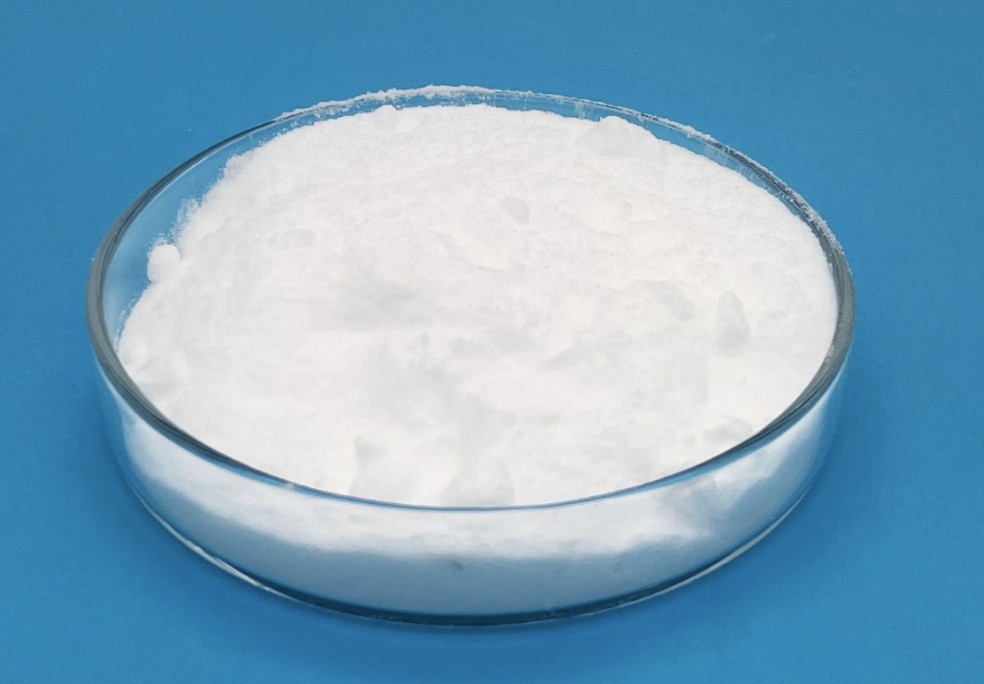
Produktname: Tetracainhydrochlorid
Synonyme: Tetracain HCL
CAS: 136-47-0
MF: C15H25ClN2O2
MW: 300.82
EINECS: 205-248-5
Abgeordneter: 149°C
Lagertemp: Kühlschrank
Aussehen: Weißer Feststoff
Verwendung: Lokalanästhetikum; Wird hauptsächlich als Schleimhautanästhetikum verwendet. Die Wirkung ist stärker als bei Procain und Lidocain.
Tetracain (GASTHOF, auch als Amethocain bekannt; Handelsname Pontocaine. Ametop und Dicain) ist ein starkes Lokalanästhetikum der Estergruppe. Es wird hauptsächlich topisch in der Augenheilkunde und als juckreizstillendes Mittel eingesetzt, und es wurde in der Spinalanästhesie eingesetzt.
In der biomedizinischen Forschung, tetracaine is used to alter the function of calcium release channels (ryanodine receptors) that control the release of calcium from intracellular stores. Tetracaine is an allosteric blocker of channel function. At low concentrations, tetracaine causes an initial inhibition of spontaneous calcium release events, while at high concentrations, tetracaine blocks release completely.
Tetracaine HCL is synthesized from 4-butylaminobenzoic acid. The ethyl ester is formed through an acid-catalyzed esterification reaction.
Tetracaine Hcl is a potent local anesthetic of the ester group.It is mainly used topically in ophthalmology and as an antipruritic,und es wurde in der Spinalanästhesie eingesetzt.
Tetracaine hydrochloride is indicated for the production of spinal anesthesia for procedures requiring two to three hours.
Das Wirksamkeitsprofil von Lidocain als Lokalanästhetikum zeichnet sich durch einen schnellen Wirkungseintritt und eine mittlere Wirkungsdauer aus. daher, Lidocain ist zur Infiltration geeignet, Block, und Oberflächenanästhesie. Bei Subdural- und Epiduralanästhesien werden teilweise länger wirksame Substanzen wie Bupivacain bevorzugt; Lidocain,obwohl, hat den Vorteil eines schnellen Wirkungseintritts.
In zahnärztlicher Anästhesie, Eine relative Unempfindlichkeit gegenüber Lidocain kann aus anatomischen Gründen aufgrund unerwarteter Nervenlagen auftreten. Manche Menschen mit Ehlers-Danlos-Syndrom reagieren unempfindlich auf Lidocain.