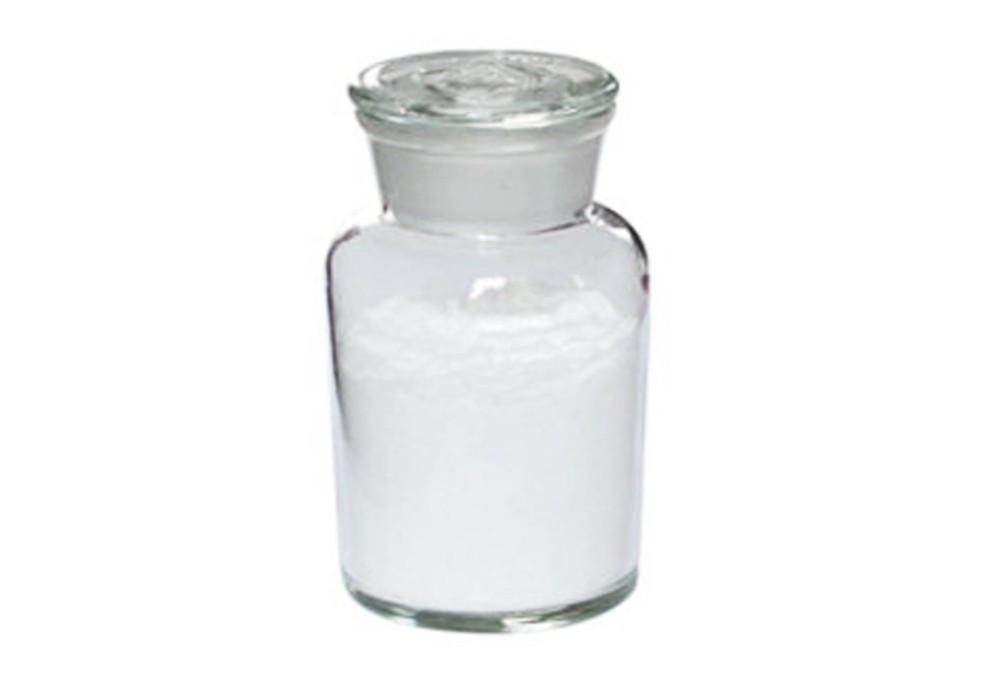
Cyproheptadine Hydrochloride
CAS-nr. : 969-33-5
Moleculaire formule: C21H22ClN
Moleculair gewicht: 323.86
EINECS-NR: 213-535-1
Cyproheptadine hydrochloride, also known as dibenzocycloheptadine, antigentadine, is a hexahydropyridine antihistamine, which can compete with histamine released from tissues for H1 receptors on effector cells, thus preventing the onset of allergic reactions and relieving the spasmogenic and congestive effects of histamine, which has a strong H1 receptor antagonistic effect and stronger antihistamine effect than paracetamol and promethazine. It has mild to moderate anti-5-hydroxytryptamine effect and anticholinergic effect.
In aanvulling, Cyproheptadine hydrochloride also has the effect of stimulating appetite, and weight gain can be seen after taking for a certain period of time.
Cyproheptadine hydrochloride is a white or yellowish crystalline powder, almost odorless, with a slightly bitter taste. It is soluble in methanol, dissolved in chloroform, slightly soluble in ethanol, slightly soluble in water and almost insoluble in ether.
Klinisch, cyproheptadine hydrochloride is mainly used for acute and chronic urticaria (especially cold urticaria has good effect), papular urticaria, angioedema, allergic eczema, contactdermatitis, food allergic reaction, drug allergic reaction, allergische rhinitis, hay fever, allergic nodular inflammation, insect sting allergy and migraine.
Cyproheptadine hydrochloride has some therapeutic effect on bronchial asthma. It can also be used as an adjuvant treatment for Cushing's syndrome and acromegaly.
Cyproheptadine hydrochloride can also be used as an appetite enhancer for neurotic appetite fear.
Cyproheptadine hydrochloride has also been reported for the treatment of acanthosis nigricans and the prevention of necrotizing pyoderma.
| ITEMS OF ANALYSIS |
SPECIFICATIES |
RESULTAAT |
| Verschijning |
White to slightly yellow, odorless or
vrijwel geurloos, kristallijn poeder. |
Wit kristallijn poeder |
| Identificatie |
EN:The infrared absorption spectrum of the potassium bromide dispersion of the sample exhibits maxima only at the same wavelengths as that of a similar preparation of Cyproheptadine Hydrochloride reference standard |
Voldoet |
| HPLC:The retention time of the cyproheptadine peak of the sample solution corresponds to that of the standard solution, as obtained in the test for organic impurities |
Voldoet |
| A saturated solution gives reaction of chlorides |
Voldoet |
| Oplosbaarheid |
Vrij oplosbaar in methanol, sparingly soluble in chloroform, slecht oplosbaar in alcohol, slightly soluble in water practically insoluble in ether. |
Voldoet |
| Fluorescence Test |
To comply |
Voldoet |
| Residue of Ignition |
≤ 0.1% |
0.07% |
| Gesulfateerde as |
≤ 0.1% |
0.08% |
| Lichtabsorberende onzuiverheden |
At 490nm ≤ 0.07 |
0.04 |
| Organic Impurities by HPLC |
Cyproheptadine related compound C: ≤ 0.15% |
Niet gedetecteerd |
| Amitriptyline related compound B ≤ 0.15% |
Niet gedetecteerd |
| Cyproheptadine related compound A ≤ 0.15% |
0.05% |
| Any individual unknown Impurity ≤ 0.1% |
0.05% |
|
Totale onzuiverheden ≤0,5% |
0.13% |
| Zuurgraad |
NMT 0.15 ml of 0.01 M sodium Hydroxide is
required to change the co lour of the indicator
|
0.1ml |
| Water Determination |
7.0% naar 9.0% |
8.5% |
| Resterende oplosmiddelen |
Methanol ≤300ppm |
163ppm |
| O-rylene ≤2170ppm |
Niet gedetecteerd |
| lsopropyl alcohol ≤5000ppm |
24ppm |
| Toluene ≤890ppm |
Niet gedetecteerd |
| Tetrahydrofuran ≤720ppm |
Niet gedetecteerd |
| Chloroform ≤60ppm |
Niet gedetecteerd |
| Analyse (Dry based) |
98.5%~100,5% |
100.2% |
| Conclusie |
Complies with the USP40 standard |