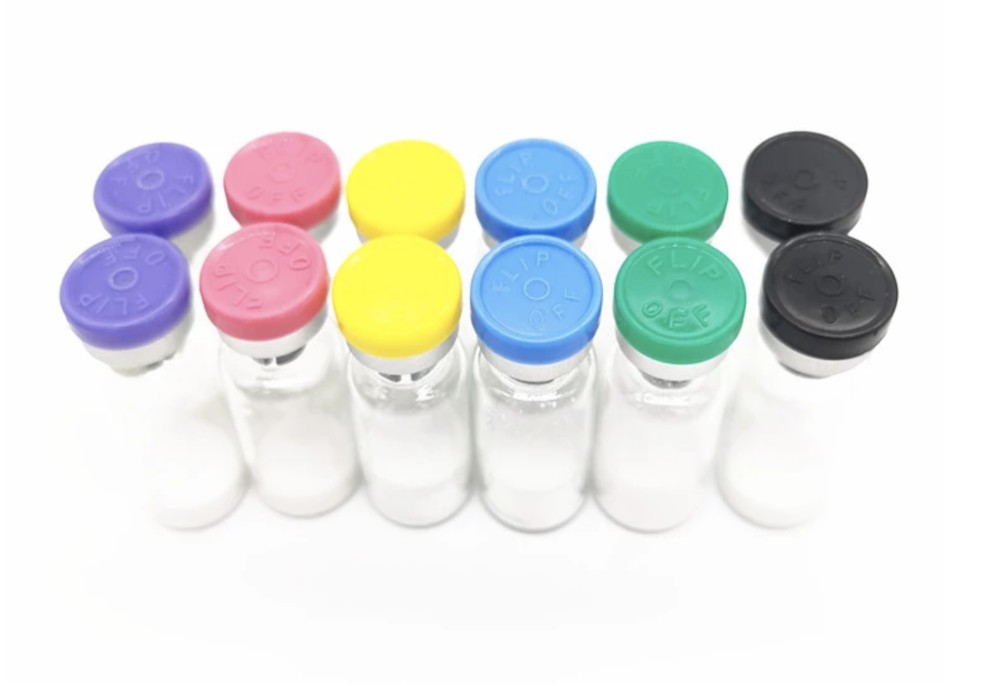
Eledoisin Acetate
CAS-registernommer: 69-25-0
Graad: Farmseutiese Graad
Molekulêre Formule: C54H85N13O15S
Molekulêre gewig: 1188.44
Reinheid (HPLC): 99.0%
Voorkoms: Wit poeier
Enkele Onreinheid(HPLC): 0.5%
Aminosuur samestelling: 10% van teoretiese
Peptied inhoud(N%): 80%(deur %N)
Waterinhoud(Karl Fischer): 6.0%
Asetaat inhoud(HPIC): 15.0%
Eledoisin is 'n undekapeptied van weekdier oorsprong, behoort aan die tachykinienfamilie van neuropaptiede.
Dit is eers geïsoleer uit die posterior speekselkliere van twee weekdierspesies Eledone muschata en Eledone aldovandi, wat aan die seekat-orde van Cephalopoda behoort.
Ander tachykiniene uit niesoogdierbronne sluit kassinien en fisalaemin in. Die soogdier tachykiniene stof P, NEEM, en NKB het soortgelyke effekte as tagykiniene van niesoogdiere en is meer wyd bestudeer en gekarakteriseer. Hierdie peptiede vertoon 'n wye en komplekse spektrum van farmakologiese en fisiologiese aktiwiteite soos vasodilatasie, hipertensie, en stimulasie van ekstravaskulêre gladdespier.
Eledoisin het die aminosuurvolgorde pGlu-Pro-Ser-Lys-Asp-Ala-Phe-Ile-Gly-Leu-Met-NH2 (qPSKDAFIGLM-NH2) waar pGlu en q vir piroglutamiensuur staan. Soos alle tachykinien peptiede, Eledoisin deel dieselfde konsensus C-terminale volgorde, dit wil sê, Phe-Xxx-Gly-Leu-Met-NH. Die onveranderlike "Phe7" residu is waarskynlik nodig vir reseptorbinding. "Xxx" is óf 'n aromatiese (fenielalanien, tirosien) of 'n vertakte alifaties (valien, isoleusien) syketting en word beskou as belangrik in reseptorselektiwiteit. Hierdie gemeenskaplike streek, dikwels na verwys as die "boodskapdomein," word geglo verantwoordelik te wees vir die aktivering van die reseptor. Die divergente N-terminale streek of die "adres domein" varies in amino-acid sequence and length and is believed to play a role in determining the receptor subtype specificity.