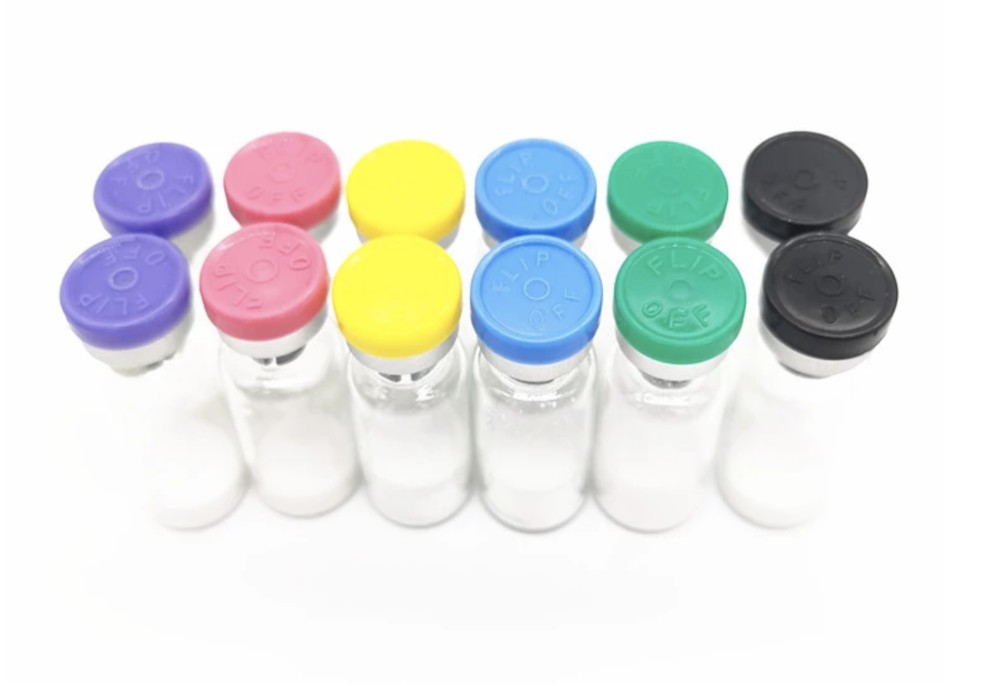
Bivalirudien
Volgorde:D-Phe-Pro-Arg-Pro-Gly-Gly-Gly-Gly-Asn-Gly-Asp-Phe-Glu-Glu-Ile-Pro-Glu-Glu-Tyr-Leu-OH
Alias:126:PN:WO2004076484BLADSY:31 beweerde proteïen;Angiomaks;BG 8967;Bivalirudien;Hirulog; Hirulog 1
Cas No.: 128270-60-0
Molekulêre Formule: C98H138N24O33
Molekulêre gewig: 2180.29
Reinheid (HPLC): 98.0%min.
Voorkoms: Wit poeier
Enkele Onreinheid (HPLC): 1.0%maks
Aminosuur samestelling: ±10% van teoreties
Peptied inhoud (N%): >80.0%
Waterinhoud (Karl Fischer): <8.0%
Trifluoracetaat inhoud(HPIC): >12.0%
MS (ESI): Konsekwent
Massabalans: 95.0~105,0%
Graad : Farmaseutiese Graad
Berging: Gesluit, hieronder 2 ~ 8℃ bewaring
Gebruik : Hierdie produk word hoofsaaklik gebruik vir die voorkoming van vaskulêre vorming intervensionele terapie in die behandeling van onstabiele angina, isgemiese komplikasies voor en na. Dit inhibeer beide sirkulerende en klontgebonde trombien, terwyl dit ook trombien-gemedieerde bloedplaatjieaktivering en aggregasie inhibeer.
Bivalirudien (Angiomax of Angiox, vervaardig deur The Medicines Company) is 'n spesifieke en omkeerbare direkte trombien-inhibeerder (DTI).
Bivalirudin is 'n DTI wat baie beperkings oorkom wat gesien word met indirekte trombien-inhibeerders, soos heparien. Bivalirudin is 'n kort, synthetic peptide that is potent, highly specific, and a reversible inhibitor of thrombin. It inhibits both circulating and clot-bound thrombin, terwyl dit ook trombien-gemedieerde bloedplaatjieaktivering en aggregasie inhibeer. Bivalirudin has a quick onset of action and a short half-life. It does not bind to plasma proteins (other than thrombin) or to red blood cells. Therefore it has a predictable antithrombotic response. There is no risk for Heparin Induced Thrombocytopenia/Heparin Induced Thrombosis-Thrombocytopenia Syndrome (HIT/HITTS). It does not require a binding cofactor such as antithrombin and does not activate platelets. These characteristics make bivalirudin an ideal alternative to heparin.
Bivalirudin clinical studies demonstrated consistent positive outcomes in patients with stable angina, unstable angina (UA), non-ST segment elevation myocardial infarction (NSTEMI), and ST-segment elevation myocardial infarction (STEMI) PCI ondergaan in 7 groot gerandomiseerde proewe
Bivalirudin is aangedui vir gebruik as 'n antikoagulant by pasiënte met onstabiele angina wat perkutane transluminale koronêre angioplastie ondergaan (PTCA).
Bivalirudin met voorlopige gebruik van glikoproteïen IIb/IIIa-remmer (GPI) is aangedui vir gebruik as 'n antikoagulant by pasiënte wat perkutane koronêre ingryping ondergaan (PCI).
Bivalirudin is aangedui vir pasiënte met, of die risiko loop dat HIT/HITTS PCI ondergaan.
Bivalirudin is bedoel vir gebruik saam met aspirien en is slegs bestudeer by pasiënte wat gelyktydig aspirien ontvang.