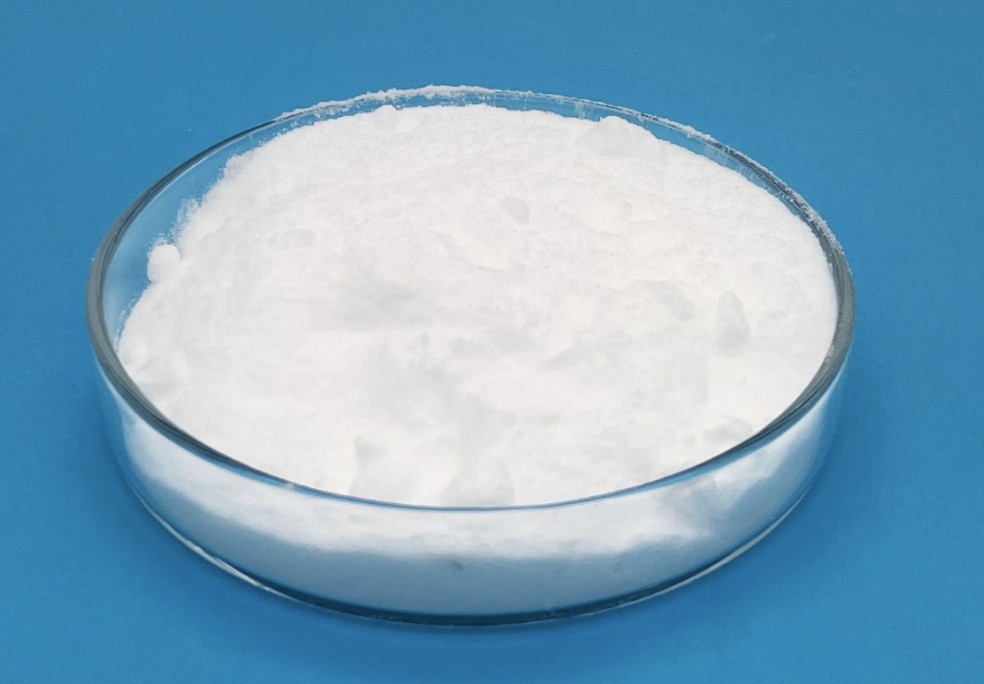
Tetrakain
CAS NR.: 94-24-6
Renhet: 99%
Molekylformel: C15H24N2O2
Molekylvikt: 264.3633
Beskrivning: vitt pulver
Specifikation: USP
Används: Lokalbedövning
Tetrakain (VÄRDSHUS, även känd som ametokain; handelsnamn Pontocaine. Ametop och Dicaine) är ett potent lokalbedövningsmedel av estergruppen. Det används främst lokalt inom oftalmologi och som klådstillande medel, och det har använts vid spinalbedövning. Det finns på Världshälsoorganisationens lista över nödvändiga läkemedel, en lista över de viktigaste medicinerna som behövs i ett grundläggande hälsosystem.
(1) Inom biomedicinsk forskning, tetrakain används för att ändra funktionen hos kalciumfrisättningskanaler (ryanodinreceptorer) som kontrollerar frisättningen av kalcium från intracellulära förråd. Tetrakain är en allosterisk blockerare av kanalfunktion. Vid låga koncentrationer, tetrakain orsakar en initial hämning av spontana kalciumfrisättningshändelser, vid höga koncentrationer, tetrakainblocken frigörs helt.
(2) Tetrakain är T i Tac, en blandning av 5 till 12 procent tetrakain, 5M(per myriad), en halv promille (0.5‰), eller .05 procent (1 del i 2000) , och 4 eller 10 procent hydroklorid som används i örat, näsa & halsoperation och på akutmottagningen där bedövning av ytan behövs snabbt, speciellt när barn har skadats i ögat, öra, eller andra känsliga platser.
(3) Tetrakain syntetiseras från 4-butylaminobensoesyra. Etylestern bildas genom en syrakatalyserad förestringsreaktion. Baskatalyserad transesterifiering uppnås genom att koka etylestern av 4-butylaminobensoesyra med överskott av 2-dimetylaminoetanol i närvaro av en liten mängd natriumetoxid.
Innan du använder Tetracaine, barbiturater bör tas först. En liten mängd adrenalin bör tillsättas i bedövningsmedel för att förbättra kapillärkontraktionen, och minska läkemedelsabsorptionen.
Du bör göra en prövning innan du använder utvärtesbedövningsmedel. Endast utan allergisk reaktion kan lämplig mängd användas. I biomedicinsk forskning, tetrakain används för att ändra funktionen hos kalciumfrisättningskanaler (ryanodinreceptorer) som kontrollerar frisättningen av kalcium från intracellulära förråd. Tetrakain är en allosterisk blockerare av kanalfunktion. Vid låga koncentrationer, tetrakain orsakar en initial hämning av spontana kalciumfrisättningshändelser, vid höga koncentrationer, tetrakain blockerar frigörs helt.Används för slemhinneepidermal anestesi, nervvävnad anestesi, epidural anestesi och subaraknoidal anestesi. Vid tillverkning av farmaceutiska preparat för utvärtes bruk, för att lindra smärtan av droger eller läkemedel lesioner smärta.
Tetracaine HCL syntetiseras från 4-butylaminobensoesyra. Etylestern bildas genom en syrakatalyserad förestringsreaktion. Baskatalyserad transesterifiering uppnås genom att koka etylestern av 4-butylaminobensoesyra med överskott av 2-dimetylaminoetanol i närvaro av en liten mängd natriumetoxid.
Tetrakain är T i Tac, en blandning av 5 till 12 procent tetrakain, 5M(per myriad), en halv promille (0.5‰), eller .05 procent (1 del i 2000) , och 4 eller 10 procent hydroklorid som används i örat,näsa & halsoperation och på akutmottagningen där bedövning av ytan behövs snabbt, speciellt när barn har skadats i ögat, öra, eller andra känsliga platser.
| Testobjekt |
Specifikation |
Testresultat |
| Utseende |
Bra, vit, kristallin, luktfritt pulver |
bekräfta |
| Identifiering |
ABC i Pass |
bekräfta |
| Löslighet |
Mycket löslig i vatten, löslig i alkohol;
olöslig i eter och bensen |
bekräfta |
| USP Referensstandarder |
USP Tetracaine Hydrochloride RS
USP Endotoxin RS. |
bekräfta |
| Smältpunkt |
145~150 grader |
146.0~147,5 grader |
| Kromatografisk renhet |
I Pass |
bekräfta |
| Relaterat ämne |
Inte mer än referenslösningen 0.05% |
bekräfta |
| Tungmetaller |
≤10 ppm |
bekräfta |
| PH |
4.5-6.5 |
5.8 |
| Rester vid antändning |
≤0,10 % |
0.05% |
| Förlust vid torkning |
≤ 0.5% |
0.19% |
| Analysera |
98.0 -101.0% |
100.1% |