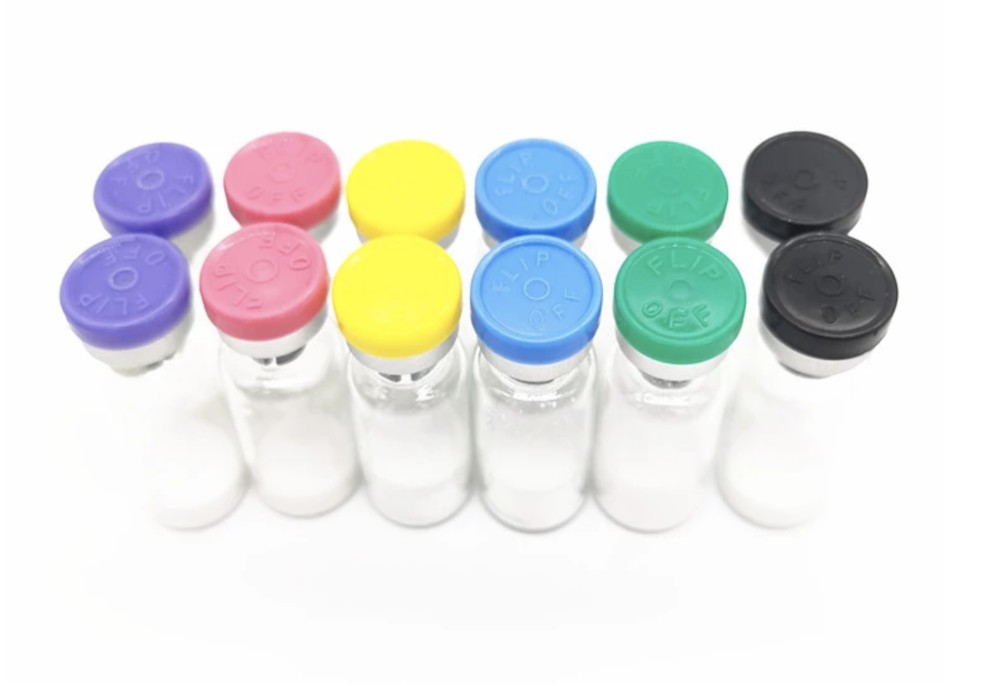
بیوالیرودین
دنباله:D-Phe-Pro-Arg-Pro-Gly-Gly-Gly-Gly-Asn-Gly-Asp-Phe-Glu-Glu-Ile-Pro-Glu-Glu-Tyr-Leu-OH
نام مستعار:126:پ.ن:WO2004076484PAGE:31 پروتئین ادعا شده;آنژیوماکس;BG 8967;بیوالیرودین;هیرولوگ; هیرولوگ 1
Cas No.: 128270-60-0
فرمول مولکولی: C98H138N24O33
وزن مولکولی: 2180.29
خلوص (HPLC): 98.0%دقیقه.
ظاهر: پودر سفید
ناخالصی منفرد (HPLC): 1.0%حداکثر
ترکیب اسید آمینه: ± 10 درصد نظری
محتوای پپتید (N%): >80.0%
محتوای آب (کارل فیشر): <8.0%
محتوای تری فلورو استات(HPIC): >12.0%
اماس (ESI): سازگار
توازن جرم: 95.0~ 105.0٪
درجه : درجه دارویی
ذخیره سازی: بسته شد, زیر 2 حفظ ~ 8 ℃
استفاده : This product is mainly used for the prevention of vascular forming interventional therapy in the treatment of unstable angina, ischemic complications before and after.It inhibits both circulating and clot-bound thrombin, while also inhibiting thrombin-mediated platelet activation and aggregation.
بیوالیرودین (Angiomax or Angiox, manufactured by The Medicines Company) is a specific and reversible direct thrombin inhibitor (DTI).
Bivalirudin is a DTI that overcomes many limitations seen with indirect thrombin inhibitors, such as heparin. Bivalirudin is a short, synthetic peptide that is potent, highly specific, and a reversible inhibitor of thrombin. It inhibits both circulating and clot-bound thrombin, while also inhibiting thrombin-mediated platelet activation and aggregation. Bivalirudin has a quick onset of action and a short half-life. It does not bind to plasma proteins (other than thrombin) or to red blood cells. Therefore it has a predictable antithrombotic response. There is no risk for Heparin Induced Thrombocytopenia/Heparin Induced Thrombosis-Thrombocytopenia Syndrome (HIT/HITTS). It does not require a binding cofactor such as antithrombin and does not activate platelets. These characteristics make bivalirudin an ideal alternative to heparin.
Bivalirudin clinical studies demonstrated consistent positive outcomes in patients with stable angina, unstable angina (UA), non-ST segment elevation myocardial infarction (NSTEMI), and ST-segment elevation myocardial infarction (STEMI) undergoing PCI in 7 major randomized trials
Bivalirudin is indicated for use as an anticoagulant in patients with unstable angina undergoing percutaneous transluminal coronary angioplasty (PTCA).
Bivalirudin with provisional use of glycoprotein IIb/IIIa inhibitor (GPI) is indicated for use as an anticoagulant in patients undergoing percutaneous coronary intervention (PCI).
Bivalirudin is indicated for patients with, or at risk of HIT/HITTS undergoing PCI.
Bivalirudin is intended for use with aspirin and has been studied only in patients receiving concomitant aspirin.